Jun 2, 2026
CBSE Evaluation Crisis - A Guide for Students and Parents
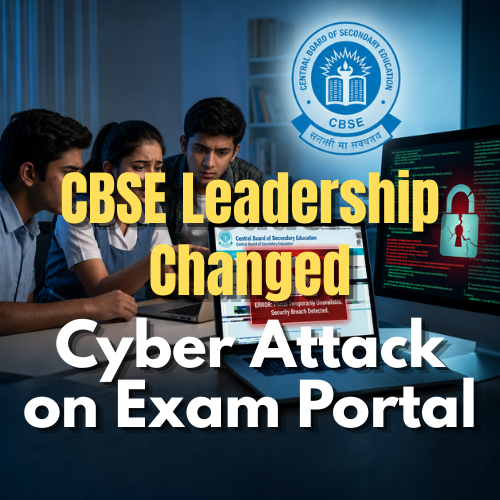
The aftermath of the Class 12 board examinations has introduced unexpected challenges for millions of students and their parents across India. What should have been a standard transition into higher education has turned into a period of uncertainty, driven by technical glitches, digital infrastructure vulnerabilities, and a sudden administrative overhaul at the Central Board of Secondary Education (CBSE).
For families trying to secure university admissions, understanding these developments is crucial. Let us take an objective look at the ongoing crisis, how it impacts students and parents, and what are the best steps to navigate through this.
Top Leadership Restructuring and the OSM System Probe
The evaluation process for the Class 12 answer scripts was managed through a newly introduced digital framework known as the On-Screen Marking (OSM) system. Designed to streamline grading by digitizing physical answer sheets for examiners, the system instead faced immediate friction. Students and their families took to social media to report widespread evaluation discrepancies, including technical glitches, payment failures, and severe delays in obtaining scanned copies of answer scripts.
As per reports by The Hindu, the central government initiated an immediate administrative restructuring, as a direct response to growing anxiety among students and parents.
Key Administrative Shifts
- Leadership Replacement: The CBSE Chairperson and the Board’s Secretary were transferred out of their roles with immediate effect. Senior IAS officer Lokhande Prashant Sitaram has been appointed as the new CBSE Chairperson, while Varun Bhardwaj has assumed the role of CBSE Secretary.
- High-Level Inquiry: The government has constituted a formal one-member committee, headed by S. Radha Chauhan (Chairperson of the Capacity Building Commission), to investigate the procurement of services and vendor selection for the OSM platform.
- Technical Audit: To restore structural integrity to the grading pipeline, the Ministry of Education has deployed a four-member technical team comprising experts from IIT-Kanpur and IIT-Madras to audit the digital marking system and reinforce operational safeguards.
For parents, this intervention confirms that the discrepancies reported by students are being officially recognized and addressed at the highest administrative levels, ensuring accountability for the current cohort's academic records.
Cyberattacks Target the Re-evaluation Portal
To assist students dissatisfied with
their initial Class 12 results, CBSE activated an online verification and
re-evaluation portal.
However, the system faced severe operational
disruptions almost immediately after going live.
According to official statements from the board, malicious digital actors targeted the portal with a massive, coordinated cyberattack. The platform endured a Denial-of-Service (DoS) attack that flooded the server with nearly 15 lakh (1.5 million) hits within a brief two-minute window. Simultaneously, cybersecurity teams detected over one lakh unauthorized attempts to access internal files.
Expert Analysis: Cybersecurity analysts described the incident as a tactical, two-pronged operation where the massive traffic surge acted as a smokescreen while attackers attempted to probe sensitive student data files.
Impact on Students and Portal Fixes
Because the portal handles highly sensitive information—including minors' personal details, Aadhaar-linked identities, and scanned answer sheets—the attack caused immediate login failures, "access denied" errors, and platform crashes – as per a Times of India report.
Despite the intense digital traffic, CBSE's technical teams managed to keep the infrastructure operational. To accommodate the technical slowdowns and alleviate student anxiety, the board implemented immediate improvements:
- Session Extensions: Time limits for active sessions were extended so students wouldn't be logged out mid-application.
- Concurrent Capacity: The portal was optimized to support over 8,000 to 14,000 concurrent users smoothly.
- Successful Processing: Despite the initial disruptions, more than 28,000 students successfully completed their verification submissions within the launch window.
Student Whistleblower Exposes System Vulnerabilities
The Economic
Times reported that the scrutiny surrounding the evaluation crisis
intensified following a rare intervention by a student investigator.
Sarthak Sidhant, a 17-year-old student from Jharkhand
who was directly affected by the OSM rollout, presented an independent
investigation directly to a Parliamentary Standing Committee.
Reviewing public tender records on the Central Public Procurement portal, the young investigator flagged at least 15 distinct discrepancies in how the digital marking contracts were handled. His presentation highlighted altered eligibility clauses across successive tender cycles and brought attention to significant software vulnerabilities. Notably, his brief coincided with reports of another teenager who successfully accessed the OSM portal to expose critical security gaps to the authorities.
The student investigator clarified that his findings do not oppose the concept of digital grading itself. Instead, he argued that a high-stakes system affecting millions of students required much broader pilot testing before a nationwide rollout.
Because this testimony was formally presented to a statutory parliamentary panel, the Ministry of Education and CBSE are required to submit an official Action Taken Report. This ensures that the technical flaws affecting this year's grading will receive legally mandated, transparent rectification.
Timeline of the Evaluation Crisis
The following timeline outlines the rapid sequence of events that disrupted the post-examination process for Class 12 families:
· Scheduled Portal Launch Postponed (May 29, 2026)
The online application system for the verification of Class 12 answer books experiences a delay due to unresolved technical hitches in the underlying OSM framework.
· Leadership Overhaul & Inquiry Ordered (June 2, 2026 - Morning)
The central government removes the top CBSE leadership. A high-level inquiry committee is formed alongside an IIT expert panel to secure the digital infrastructure.
· Portal Activation & Mass Cyberattack (June 2, 2026 - Afternoon)
The re-evaluation portal goes live. Within minutes, it is hit by 15 lakh automated requests and 1 lakh unauthorized file probes, causing widespread login crashes.
· Whistleblower Testimony (June 2, 2026 - Evening)
A 17-year-old student investigator presents a detailed breakdown of OSM tender discrepancies and portal vulnerabilities to a parliamentary panel.
· System Optimization (June 3, 2026)
CBSE extends portal session timers and stabilizes the platform, successfully processing tens of thousands of student applications.
Moving Forward: A Guide for Students and Parents
While administrative investigations take time to conclude, families must act within strict, immediate windows to safeguard their higher education prospects. Here is a constructive checklist for navigating the next steps safely:
· Adhere Strictly to Deadlines: The online portal for verifying scanned answer books and requesting re-evaluation remains active only from June 2 to June 6 (midnight). CBSE has explicitly stated that no offline applications or late requests will be entertained.
· Consolidate Your Requests: Applications must be treated with care. Once you click the "Freeze and Proceed to Pay" button, your entries are permanently locked and cannot be modified. Ensure that every subject you wish to contest is included in a single, comprehensive submission.
· Understand the Fee Structure: The board has structured the process clearly—the verification fee is ₹100 per answer book, while the deep re-evaluation of specific answers is charged at ₹25 per individual question. Final submissions are valid only after the online payment is completely processed.
· Document Everything: Keep digital copies and printouts of your original mark sheets, your submitted application forms, transaction receipts, and any error codes encountered during the process.
· Maintain Communication with Universities: If your college admission timelines overlap with the re-evaluation window, proactively reach out to university admissions offices. Provide them with your official re-evaluation application receipt to request provisional considerations while the board corrects your records.
The structural changes at CBSE and the deployment of premier technical institutes indicate that the system is correcting its course. For students, the most productive path forward is to stay informed, track official notifications directly on the official CBSE domain, and complete the re-evaluation steps methodically before the June 6 deadline.

.png)