Apr 29, 2026
ICSE & ISC Results 2026: A Year of Consistency and Near-Perfect Scores
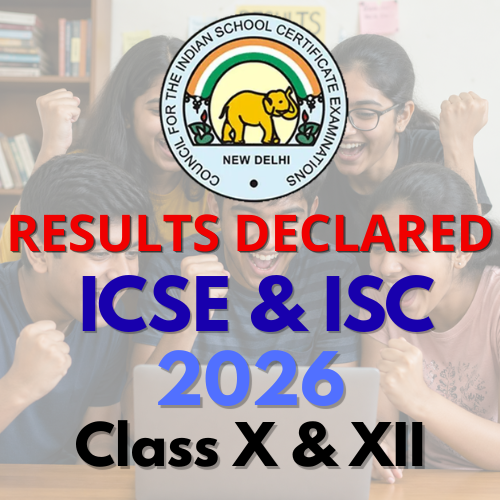
The Council for the Indian School Certificate Examinations has officially declared the ICSE (Class 10) and ISC (Class 12) results for 2026, continuing its streak of exceptionally high academic performance. Released on April 30 at 11 AM, the results reflect both stability and incremental improvement across the board, offering reassurance to students, parents, and educators alike.
Key Metrics and Performance Snapshot
The 2026 results reaffirm CISCE’s reputation for consistently high outcomes, with pass percentages remaining above the 99% mark.
ICSE (Class 10) pass percentage: 99.18%
ISC (Class 12) pass percentage: 99.13%
Total students appeared: ~3.6 lakh
Class 10 candidates: 2.58 lakh+ across 2,957 schools
Class 12 candidates: 1.03 lakh+ across 1,553 schools
Girls once again outperformed boys, achieving a pass percentage of 99.46%, continuing a long-standing trend of marginally better academic outcomes among female candidates.
The overall numbers highlight not just success, but remarkable uniformity in performance across regions and institutions.
Records and Noteworthy Highlights
While CISCE does not officially publish a toppers list—an intentional move to discourage unhealthy competition—this year’s results still stand out for their near-perfect consistency.
Pass percentages for both classes remained well above 99%, among the highest in Indian board examinations.
The performance reflects a slight improvement over last year, continuing an upward trajectory.
Rather than focusing on individual ranks, the board emphasizes holistic achievement, making the absence of a toppers list itself a defining feature of its evaluation philosophy.
Trends Observed in 2026 Results
A few clear patterns emerge from this year’s results.
First, the consistency in outcomes suggests that CISCE’s evaluation and academic framework has reached a mature equilibrium. Year after year, results show minimal fluctuation, indicating reliable academic standards.
Second, the gender performance gap, though small, continues to favor girls. This trend has been consistent over recent years and reflects broader shifts in academic engagement and performance.
Third, there is evidence of strong institutional parity. Unlike earlier years where regional differences were more pronounced, current results suggest more uniform performance across schools and geographies.
Finally, the high pass percentages also hint at a growing number of high scorers, particularly in the 90%+ bracket—an ongoing trend in CISCE examinations.
Board Announcements and What Lies Ahead
CISCE has ensured accessibility and flexibility in result access and post-result processes:
Results available via official websites, DigiLocker, SMS, and mobile apps
Re-evaluation and rechecking window: May 1–4, 2026
Improvement exams expected around July 2026
Passing certificates to be issued through schools within 10–15 days
Importantly, the board continues its policy of not introducing a “second board exam,” instead allowing improvement attempts for score enhancement.
What Students and Parents Should Expect
For students, these results open the next phase—stream selection, college applications, or competitive exam preparation. Given the high scoring pattern, cut-offs for top institutions may remain competitive, especially for popular streams like Science and Commerce.
Parents can expect a relatively smooth transition process, supported by digital access to marksheets and structured post-result options like re-evaluation. However, with such high pass rates, the focus should shift from percentages to skill-building, career alignment, and long-term planning.
In essence, ICSE and ISC 2026 results are less about surprise and more about sustained excellence—predictable, consistent, and quietly impressive.
.png)